A Nod to the Scientists Who Think Outside the Box
By Deborah O’Neill Cordes
It started in the late 1990s in a simple, speculative conversation with my father. That “what if” – dinosaurs evolving intelligence – ignited a consuming passion that lasted years. I found myself diving deep into comparative anatomy, paleontology, astronomy, and geology to construct a scientifically grounded alternate universe, where dinosaurian descendants ruled.
As I think back to the beginning of my research for the Dinosaurian Time Travel Series, I recall my thrill when I discovered two eminent scientists, Carl Sagan and Dale Russell, had also speculated about dinosaurian evolution. If the K-T mass extinction had not occurred, they wondered how certain species of dinosaurs might have developed. Dr. Sagan, in his 1977 Pulitzer Prize winning book, The Dragons of Eden, thought that perhaps small dinosaurs called Sauronithoides had the potential for self-awareness. And, in the late 1980s, Dr. Russell, in his An Odyssey in Time – The Dinosaurs of North America speculated the extremely smart Troodon dinosaurs were the best candidates for the ancestors of sentient saurians, whom he called the dinosauroids.
Dale Russell’s postulations fired my imagination. Troodontids had brain folding, which indicates the mark of intelligence. Were they the smartest dinosaurs of the late Cretaceous? They also had partially opposable digits on their three-fingered hands. Had there been no K-T event, could they have evolved to become tool users? Even spacefarers? I saw Dawann-dracon then, in all her glory, and I began to write her story, mingling her tale with her human counterpart, Dawn.
There have been many others whose discoveries and speculations have added to my work. Scientists Donald Brownlee and Peter Ward helped me to create a panoply of characters. For example, their wonderful book Rare Earth: Why Complex Life is Uncommon in the Universe hypothesized that aliens with faces or body plans like humans are rare. This pushed me to speculate about other forms of sentient life in my series, such as the silicon aliens or the Oracle, beings who are very different from my saurian and human protagonists.
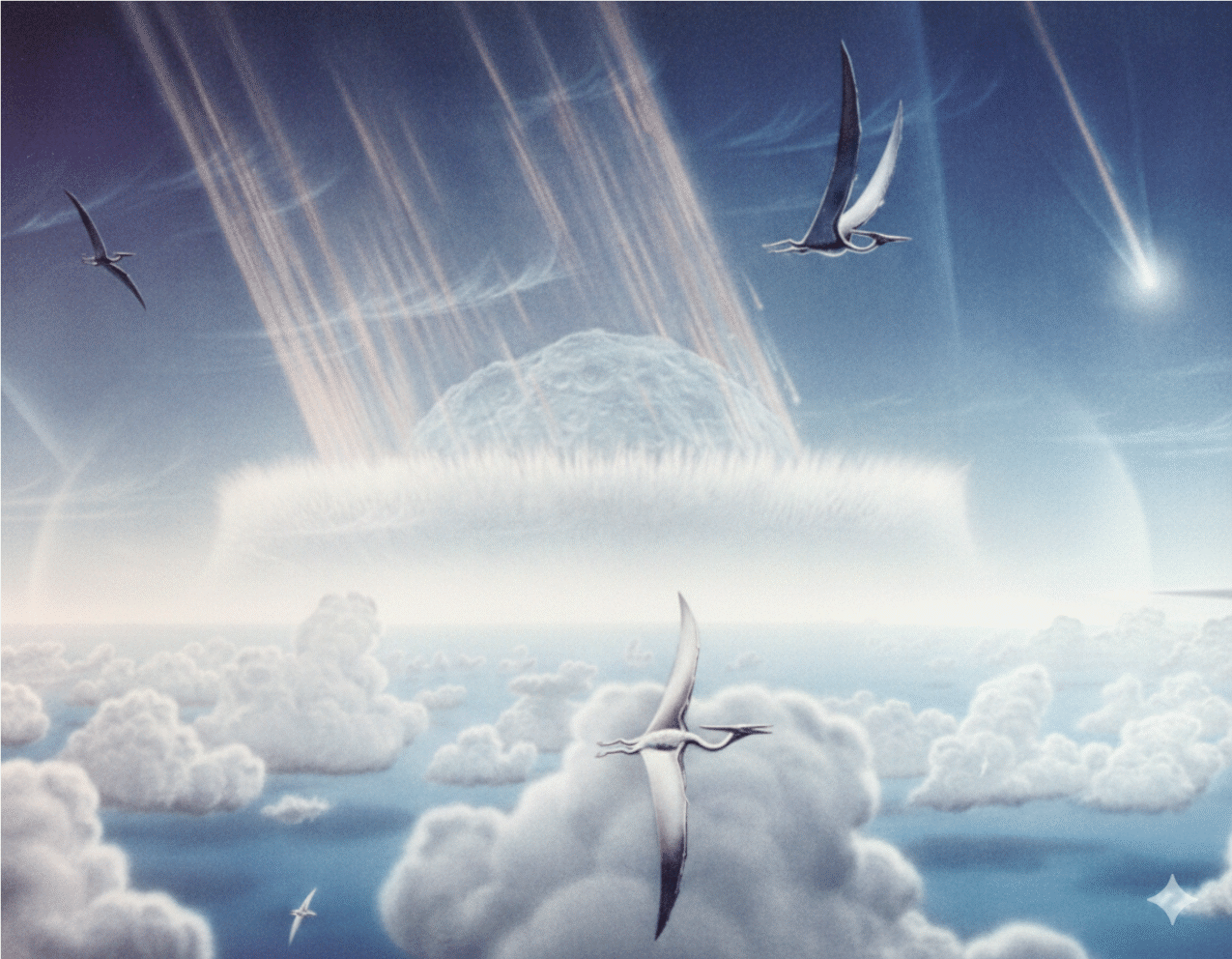
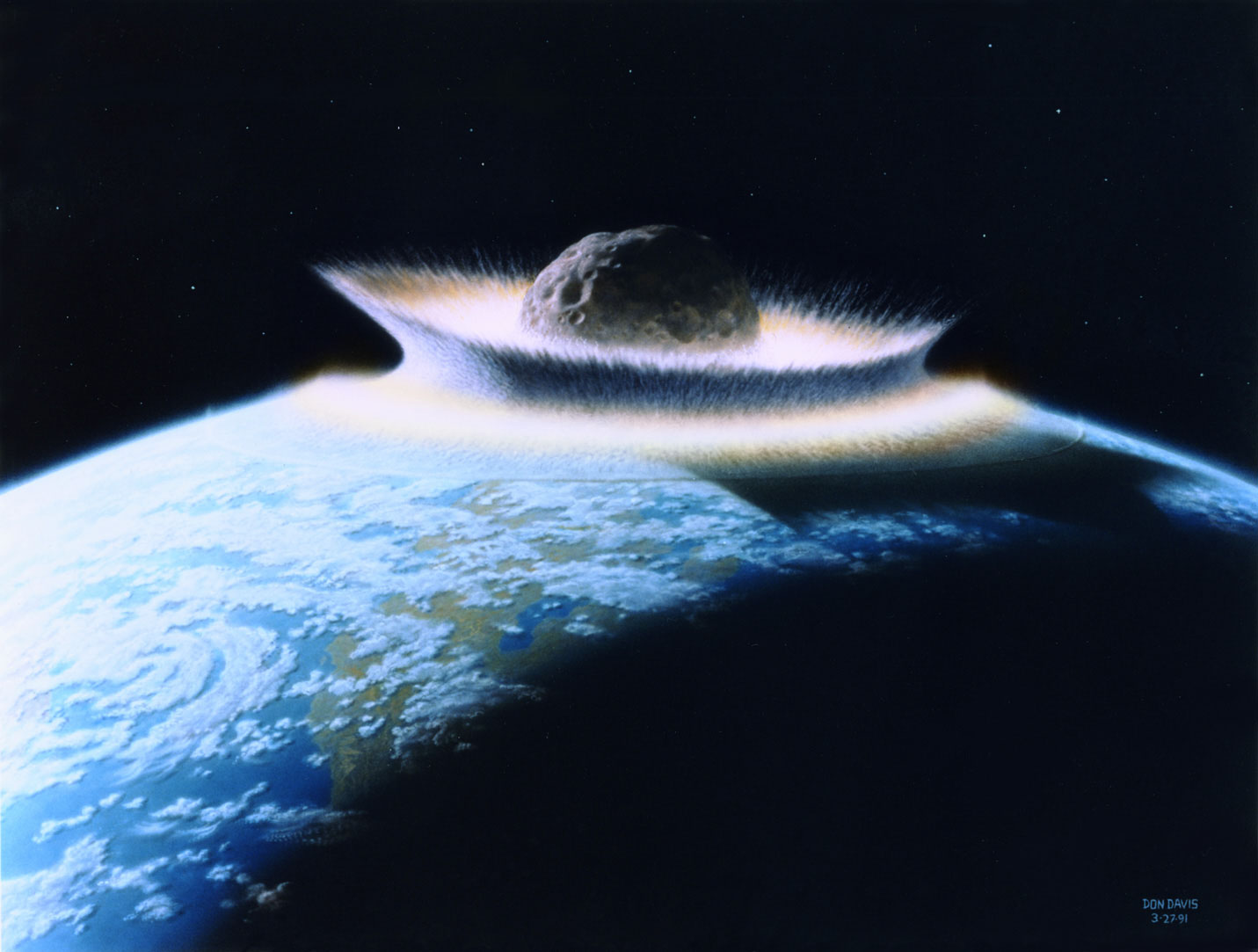
And who can forget the groundbreaking research of the scientists who had the courage and foresight to think outside the box, changing the way we view the following: the relationships between the non-avian dinosaurs and their cousins, the birds; the calamitous end of the Cretaceous some 66 million years ago; the tangled path of human evolution; and the potential for life on other planets and moons. The trailblazers include John Ostrom, Walter Alvarez, Luis Alvarez, Bob Bakker, Jack Horner, Mary Schweitzer, Mary Leakey, Donald Johanson, Gilbert Levin (who has never retreated in his assertion the Viking landers found life on Mars in the late 1970s), and the unsung geophysicist, Glen Penfield, who along with Alan Hildebrand discovered the Chicxulub Crater.
Lastly, I wish to pay tribute to the paleobotanist Jack Wolfe, who was the first to pinpoint the time of year of the K-T impact. Dr. Wolfe discovered that fossils of water lilies and lotus plants indicated they’d been blooming then. The flowers froze after the impact, most likely from the effects of an impact winter-type scenario. Since fossil evidence indicated the plants did not live long enough to bear fruit, Wolfe concluded the K-T event happened in late spring, perhaps in June, around the time of my story.
Originally published in my Author’s Note for Dragon Dawn, now with updates and enhancements.
Copyright © 2026 by Deborah O’Neill Cordes. All Rights Reserved.